
Restorative & Yin
Long, supported holds on the floor — the practice sound baths most often join.
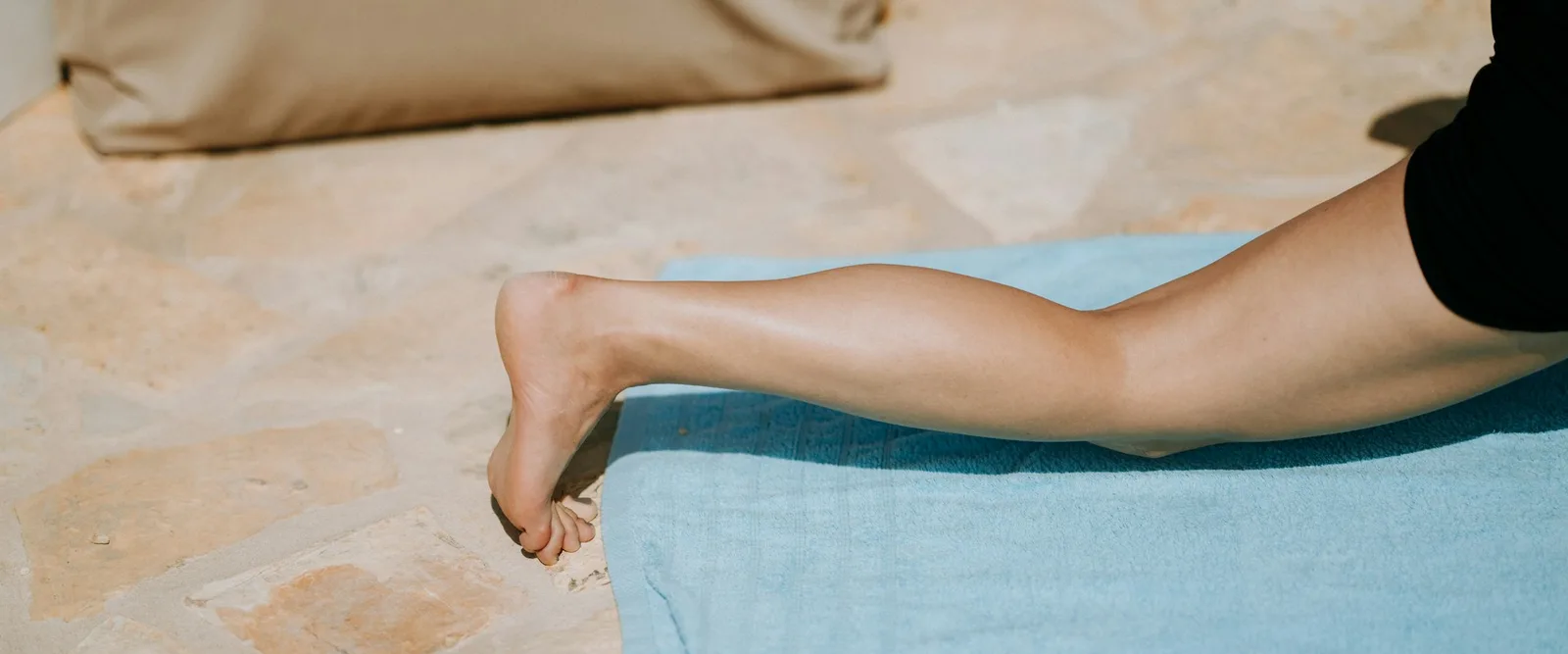
These are the two slow floor practices, and they get bracketed together constantly even though they come from different places and feel quite different from the inside.
Restorative is complete support: props under everything, no effort at all, four to six shapes in an hour, some held for twenty minutes. The point is that the body has nothing to do.
Yin is unsupported and asks more: eighteen to twenty-four passive floor poses held around five minutes each, usually at the hips, pelvis and spine, with enough sensation that five minutes feels long. Nothing is dynamic, but it is not always comfortable.
On this site they turn up mostly in company — this is the practice most often paired with a sound bath, by a wide margin.
What a session is like
Restorative: the teacher builds each shape around you with bolsters, blocks and folded blankets, then leaves you in it. Expect long silences, dim light and very little instruction once you are set.
Yin: you take a shape, find the edge where you feel something but can still breathe easily, and stay. Teachers often talk through the holds — anatomy, a reading, a wandering half-lecture — because five minutes is a long time to be alone with your hips.
Both end in a long final rest, which is where a sound bath is usually slotted in when the class is billed as a pair.
Where it comes from
Restorative yoga grew out of the Iyengar tradition, which made the deliberate use of props part of yoga in the first place. Judith Hanson Lasater, an early student of B.K.S. Iyengar, is the person who turned that into a practice of its own; her book Relax and Renew came out in 1995.
Yin has a tidy three-person lineage. Paulie Zink, a martial artist, brought long-held floor postures to North America in the late 1970s as part of a Daoist-influenced system he called yin and yang yoga. Paul Grilley studied with him in the 1980s and rebuilt the practice around anatomy and meridian theory. Sarah Powers, Grilley's student, added Buddhist psychology and gave it the name yin yoga.
The meridians and qi that yin teachers talk about are that tradition's own framework rather than demonstrated physiology, and the familiar line about yin targeting fascia rather than muscle is a teaching model, not settled science.
Good to know
If you are deciding between them: choose restorative when you are depleted or recovering, and yin when you are restless and want something to work with.
Yin's long holds put sustained load on joints. Sharp or nervy sensation is a signal to come out, not to breathe through — teachers will tell you this, and it is worth believing them.
Want to go deeper? Yin yoga: origins and practice ↗