
Sound Baths
Lie down, stay still, and let the instruments do the work.
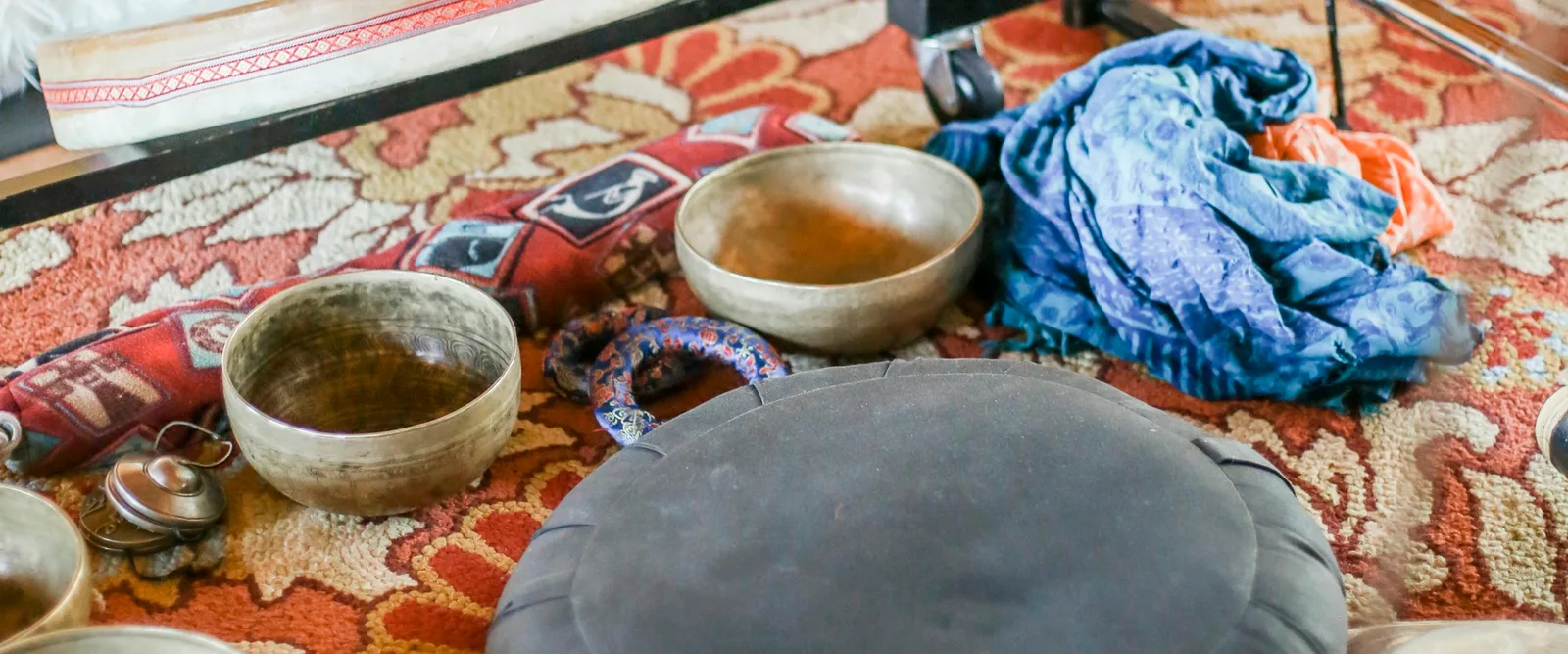
A sound bath asks almost nothing of you. You lie on a mat, fully clothed, and someone plays singing bowls, gongs, chimes and sometimes voice around the room for the better part of an hour. There is no posture to hold, no technique to learn and no way to do it wrong.
That is most of the appeal. For a lot of people it is the first contemplative practice they try, because it does not require them to be good at anything. Descriptions tend to land somewhere between a concert and a nap.
What a session is like
You arrive ten minutes early, take a mat and build a nest: a bolster under the knees, a blanket, often an eye pillow. Most studios have these; some ask you to bring your own.
The practitioner usually says a few words to settle the room, sometimes a breath or an intention, and then plays more or less continuously for most of the session — from about half an hour to well over an hour. Crystal or metal bowls layer over each other, a gong swells and recedes, small chimes mark the edges. Attention wanders, comes back, wanders again. Falling asleep is common and nobody minds.
It closes in silence, then slowly — a hand to the ribs, a stretch, sitting up before standing. Getting up too quickly is the one real mistake.
Where it comes from
Standing metal bowls have long histories as ritual and household objects across the Himalayas and East Asia. The sound bath itself is younger than that, and the honest story is the more interesting one.
The instrument reached Western ears largely through one record: Tibetan Bells, released in 1972 by Henry Wolff and Nancy Hennings. The "Tibetan singing bowl" name stuck to it, though the bowls are most likely Japanese rin bells — catalogues of Tibetan ritual music do not list them, and Tibetan monastics have said they never encountered them at home. The frosted quartz bowls are newer still: they began as offcuts from the crucibles used to grow silicon for the semiconductor industry, and were turned into instruments in the 1980s and 90s.
So the practice is about fifty years old, assembled in the West from borrowed and invented parts. That is worth knowing, and it takes nothing away from an hour spent lying on the floor listening.
Good to know
The research is thin rather than damning. Cleveland Clinic's summary is that there is not much science behind sound baths yet; a 2020 review of four studies found possible benefits and asked for better work. The study most often quoted at you had 62 people and, in its own authors' words, no control group.
None of which stops people finding it restful — it just means "restful" is the honest claim, not anything medical. If you live with a psychiatric condition, it is worth a word with your doctor first: like other meditative practices, lying still in the dark can bring up more than expected.
Want to go deeper? Cleveland Clinic on sound baths ↗