
Meditation
Sitting, with company — from silent zendos to guided studio sessions.
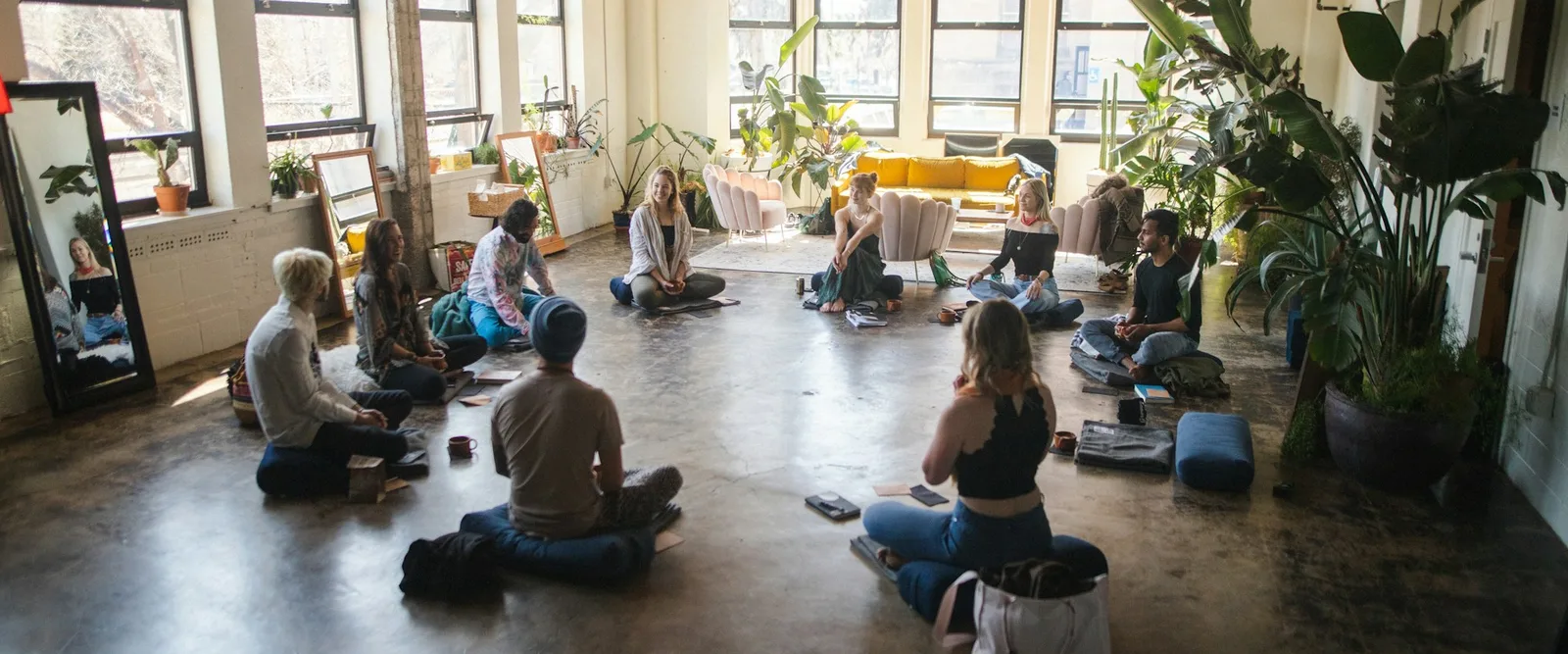
"Meditation" on a listings page covers two quite different things, and it helps to know which one you are walking into.
One is a practice centre with a lineage — a zendo, a sangha, an insight group. Sits there are usually silent, often long, sometimes with a talk afterwards, and free or by donation. The other is a guided session at a yoga or wellness studio: a teacher talking you through a body scan or a visualisation for half an hour, usually ticketed.
Both are worth doing. They just ask different things of you, and the second is a far gentler first step.
What a session is like
At a practice centre: you arrive early and quietly, take a cushion or a chair, and sit. Periods of stillness of twenty to forty minutes may alternate with slow walking. There are often forms — when to bow, which way to face — and nobody minds if you get them wrong; ask someone before it starts and they will be glad you did.
At a studio: you sit or lie however you are comfortable and follow a voice. Attention is pointed at the breath, the body, a phrase or an image. You will lose the thread constantly. Noticing that you have lost it is the practice, not a failure of it.
Where it comes from
This is the one practice on this page with genuinely ancient and multiple roots — Hindu, Buddhist, Jain and Daoist traditions among others, each with its own methods and purposes.
Most of what is offered publicly in the US today is modern and secular, descended from mindfulness-based stress reduction and its relatives, which lifted specific techniques out of Buddhist practice and put them in clinics and classrooms. A dharma sit at a temple and a guided meditation at a spa are both legitimate; they are not the same thing wearing different clothes.
Good to know
This is the best-studied practice here, and the results are real but modest. The large review commissioned by the US Agency for Healthcare Research and Quality, published in JAMA Internal Medicine, found small-to-moderate improvements in anxiety, depression and pain — and no evidence that meditation beat active alternatives like exercise or therapy. Claims well beyond that are outrunning the evidence.
It is also worth saying that meditation is not uniformly pleasant. One review found roughly eight per cent of participants reported a negative effect, most often anxiety or low mood — a rate comparable to talking therapy. If that happens to you, it is a known thing and not a sign you are doing it wrong.
Want to go deeper? NCCIH on meditation and mindfulness ↗