
Cacao Ceremonies
A shared cup of unsweetened cacao, usually wrapped around something else.
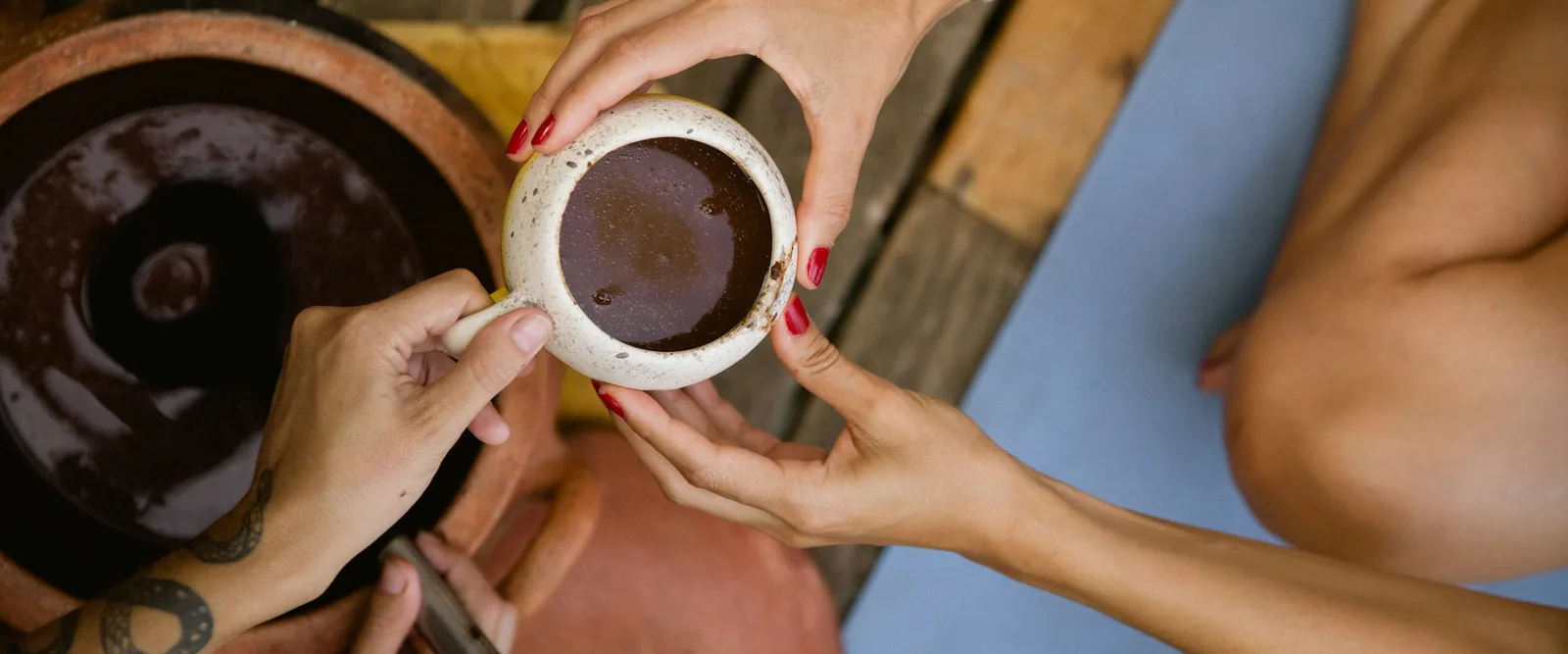
A cacao ceremony is a circle in which everyone drinks a cup of strong, largely unsweetened cacao, and then does something together — meditation, breathwork, a sound bath, journalling, sharing, sometimes dancing.
The cacao is not psychoactive in the way that word is often implied to mean. It is a stimulant: a ceremonial cup contains far more theobromine and caffeine than a chocolate bar, so there is a real lift, a warmth, and for some people a fair bit of buzz.
Mostly what the cacao does is mark the occasion and slow the start — you cannot rush a hot bitter drink — which is a perfectly good reason for it to exist.
What a session is like
You sit in a circle. The facilitator prepares and serves the cacao, usually with some ceremony, and often invites people to set an intention before drinking.
Then comes the main event, which varies enormously — this is a container more than a practice. Expect anything from guided meditation to ecstatic dance. Many ceremonies include a round of sharing, which you are always free to pass on.
Sessions typically run ninety minutes to three hours, which is longer than newcomers expect.
Where it comes from
Cacao's history is long and genuinely documented. It was first domesticated around 3300 BC in what is now southeast Ecuador, and it was being drunk as a bitter frothed beverage on the Pacific coast of Chiapas by 1900 BC. Among the Maya it featured in ceremonies, weddings, festivals and funerary offerings; for the Aztecs it was largely restricted to elites and issued to soldiers. It was ground on a metate, mixed with water, vanilla and flowers, and poured between vessels from a height to raise the foam, which was the prized part. It was not sweetened.
The modern cacao ceremony — circle, facilitator, intention, warm spiced cup — is a contemporary Western format that draws on that history rather than continuing it. There is no documented unbroken line from Maya priests to today's facilitators, and "ceremonial grade" is a marketing phrase with no standard behind it.
The critique that goes with this is worth hearing rather than dismissing: ceremonies routinely credit "the Maya" as a single undifferentiated people, are usually led by non-indigenous facilitators trained on short courses, and rarely send anything back to the communities that grow the cacao. A ceremony can be a lovely evening and still be honest about what it is.
Good to know
It is a stimulant dose. Raised heart rate, alertness and jitteriness are ordinary; an evening ceremony can keep you up. If you are sensitive to caffeine, say so when you book — most facilitators will pour you a smaller cup.
If you have a heart condition, are pregnant, or take MAOIs or other antidepressants, check with your doctor before a high-dose ceremony.
Want to go deeper? The documented history of cacao ↗