
Reiki & Energy Healing
Hands resting lightly on or above the body, in quiet.
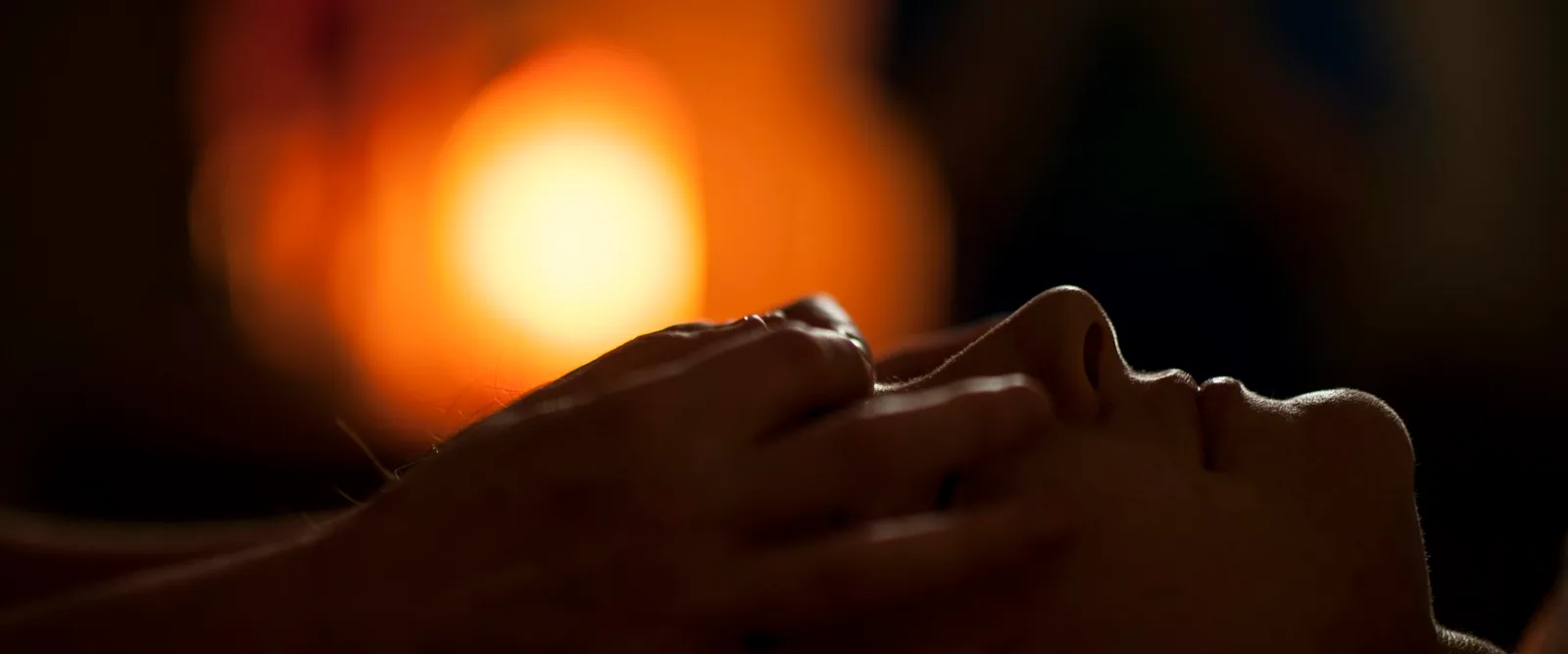
Reiki is a Japanese practice in which a practitioner rests their hands lightly on, or just above, a clothed person lying on a treatment table, moving through a series of positions and holding each for a few minutes.
Most reiki is one-to-one. What turns up on an events listing is usually a reiki share — a group evening where practitioners and beginners take turns giving and receiving — or reiki paired with a sound bath, which is a common combination.
It is quiet and it is still, and a fair number of people fall asleep on the table.
What a session is like
You stay fully clothed and lie on your back on a table, or sit if lying is uncomfortable. There is usually soft music and low light.
The practitioner works through hand positions from head to feet, spending a few minutes at each, touching lightly or hovering. Little is said. Warmth under the hands is the most commonly reported sensation.
A session is about an hour. In a group share you will likely get twenty minutes or so on the table and spend the rest of the evening giving or watching.
Where it comes from
Reiki was originated by Mikao Usui in Japan in the 1920s; the memorial stone raised after his death in 1926 records that he taught more than two thousand people.
It reached the West through Chujiro Hayashi, one of Usui's students, who trained Hawayo Takata, a Japanese-American woman from Hawaii. Takata studied with Hayashi in Tokyo in the late 1930s and taught in Hawaii and on the US mainland until her death in 1980. Essentially all Western reiki descends from her.
The founding story of a mountain retreat and a long fast is traditional to the practice rather than documented history.
Being straight about the evidence
The US National Center for Complementary and Integrative Health puts it plainly: there is no scientific evidence for the existence of the energy field reiki is said to work with, and reiki has not been clearly shown to be effective for any health-related purpose. A systematic review of nine trials found no proven effectiveness and substantial methodological problems.
What people do report is an hour of undisturbed quiet with someone paying calm attention to them, which is not nothing and is scarcer than it should be. That is the honest case for it. It is not a treatment, and it should not stand in for one.
Qigong and other moving energy practices sometimes appear under this heading too — same framework, different posture.
Want to go deeper? NCCIH on reiki ↗