
Kirtan & Chanting
Call-and-response singing. No, you don't need to be able to sing.
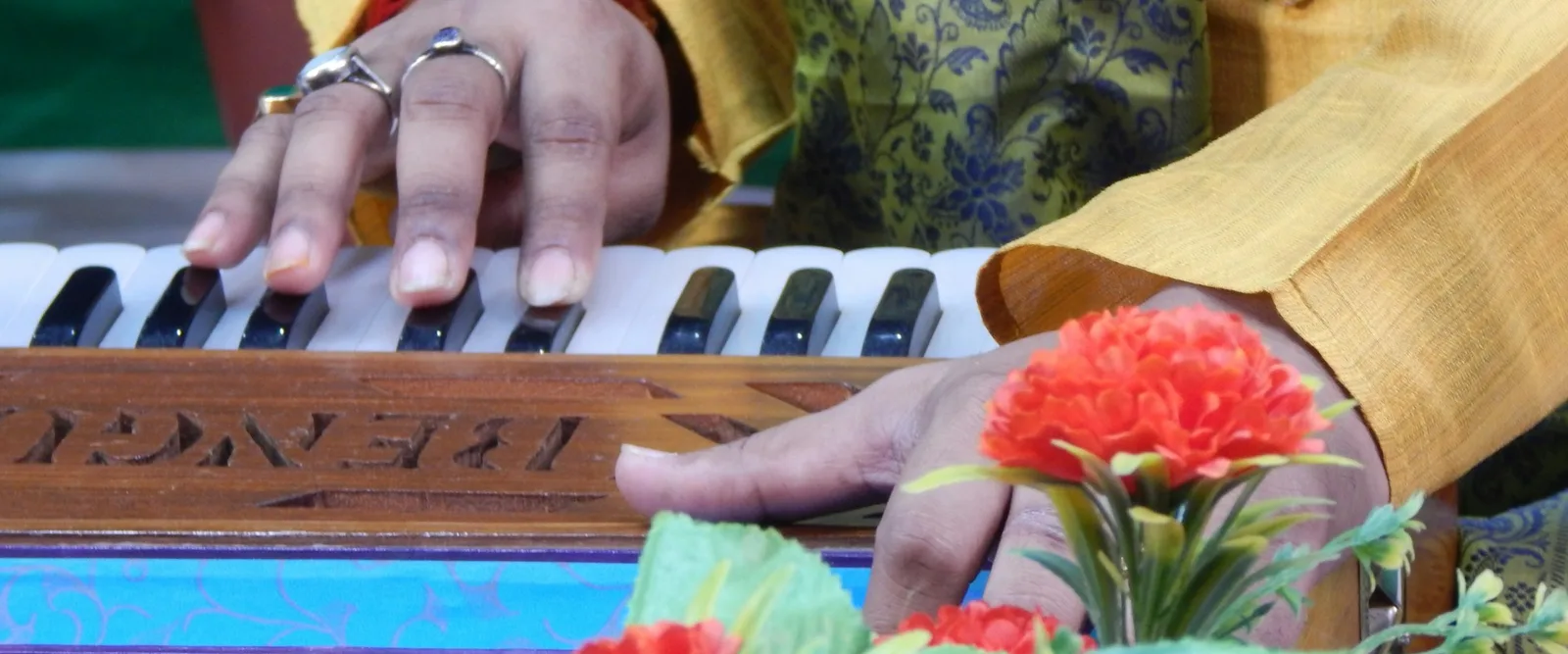
Kirtan is devotional singing in call and response. A leader sings a line — usually a Sanskrit mantra, accompanied on harmonium — and the room sings it back. That repeats, gathering pace, for anywhere from ten minutes to an hour on a single phrase.
It is the most social practice on this page and the one people are most nervous about. The nerves are misplaced: you are one voice among many, nobody is listening to you, and roughly nobody in the room can sing either.
Worth being straight about one thing — kirtan is a living religious practice, not a wellness technique. You do not need to believe anything to take part, and it is respectful to know what you are joining.
What a session is like
People sit on the floor in a loose half-circle facing the musicians. There may be a harmonium, tabla or another hand drum, and small cymbals; the audience often has shakers.
A chant starts slow and quiet. The leader sings, you repeat. Over many rounds it speeds up and gets louder, sometimes considerably, then drops back to silence. Some people close their eyes, some clap, some get up and dance, some just listen — all of it is normal.
Studio kirtans usually run an hour or ninety minutes. In temple settings they can go for two or three and end with a formal offering.
Where it comes from
This one is genuinely old and well documented. Kirtan is Sanskrit for narrating or reciting, with roots in the Vedic anukirtana tradition of call-and-response recitation, and it developed as devotional practice within the Bhakti movement, where it is named as one of the nine forms of devotion.
Chaitanya Mahaprabhu popularised Krishna kirtan in 16th-century Bengal; Shankaradeva established it in Assam in the same era. Sikh shabad kirtan is a parallel and equally real tradition.
It arrived in the US early: Paramahansa Yogananda led three thousand people in chant at Carnegie Hall in 1923. The 1960s brought a much larger wave, and the studio kirtan most people encounter today comes through performers like Krishna Das and Deva Premal.
Good to know
You do not have to know the words. They are repeated enough that you will have them by the third round, and mumbling the first two is what everyone does.
If a venue is a temple rather than a studio, a quick look at their site for anything about shoes, seating or dress will save you wondering at the door.
Want to go deeper? Kirtan: tradition and history ↗