
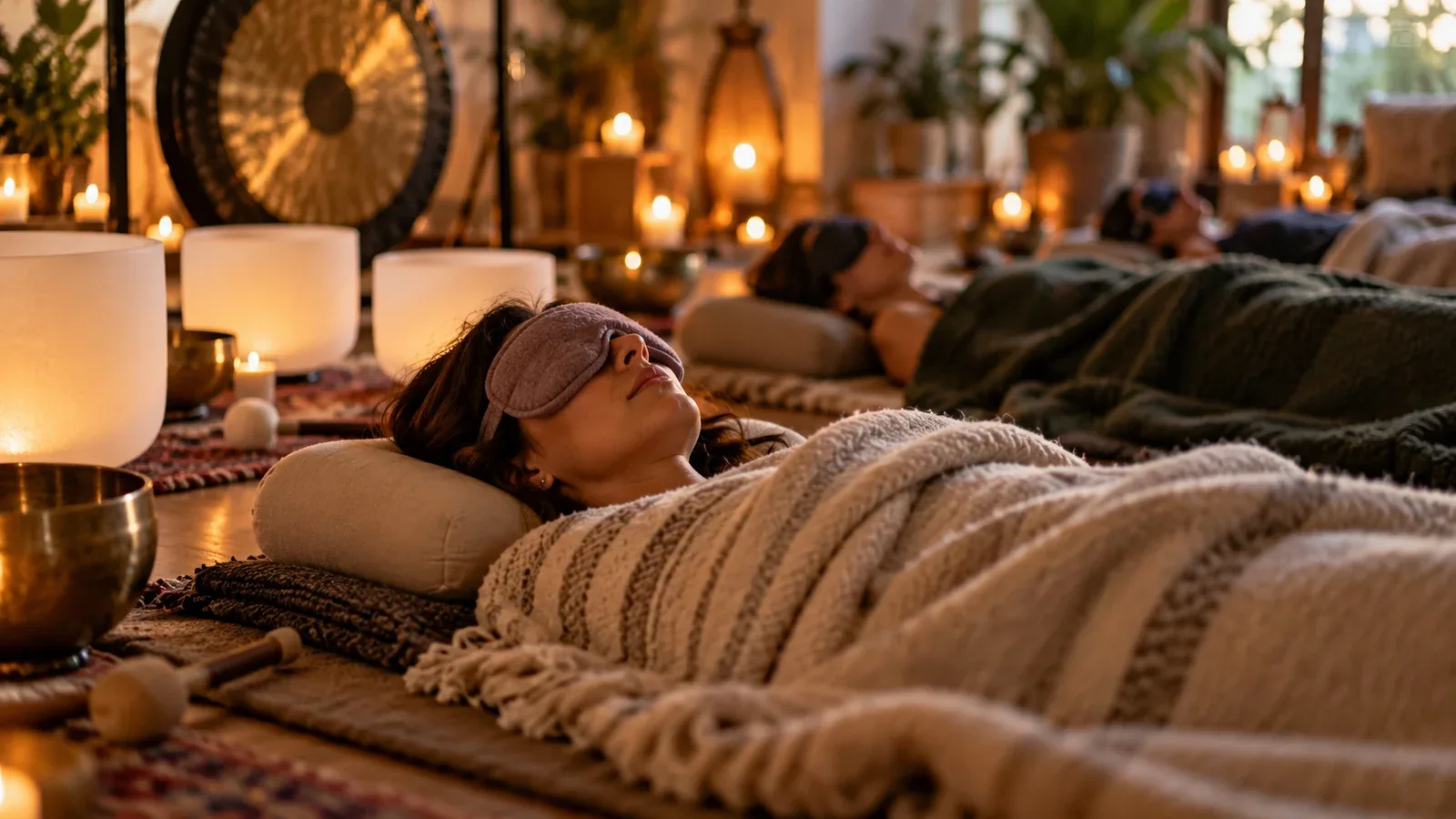
If you've booked your first sound bath, the short version is this: you'll lie down, get comfortable, close your eyes, and listen to someone play bowls, gongs or other resonant instruments for about an hour. You don't need to know anything, believe anything, or do anything. It's fine to fall asleep.
The longer version — what to wear, what to bring, how to set up, and what actually happens — is below. If you want the background first (what sound baths are, the instruments, and what the research says), start with The Complete Guide to Sound Baths.
Before you go
Read the listing properly. Check the start time, the length, and whether you need to bring a mat. Look for whether it's a pure sound bath or a combination — sound plus yoga nidra, breathwork, restorative yoga or a cacao ceremony. Combinations are lovely, but they're a different experience; breathwork in particular can be intense.
Book ahead if you can. Popular sessions sell out, especially on Sunday evenings and around full moons. Many studios cap numbers because space on the floor is limited.
Eat lightly. A big meal right before lying still for an hour isn't ideal, and neither is arriving hungry. Something small an hour or two before works for most people.
Go easy on caffeine. Not a rule, just practical — it's harder to settle with a racing heart.
Use the bathroom before it starts. You'll be lying down for a while, and getting up mid-session means stepping around people in the dark.
What to wear
Wear what you'd wear to lie on the floor for an hour: soft, stretchy, warm. Leggings or sweatpants and a comfortable top are standard. Avoid anything with a stiff waistband, big buckles or hoods that bunch under your head.
Bring a layer. Your body cools down when you lie still, and many rooms are kept cool. A sweater or hoodie you can put on or take off makes a big difference.
Wear socks. Shoes almost always come off at the door. Warm feet help you relax.
Skip strong perfume or cologne; you'll be lying close to other people.
What to bring
Check the listing — some places provide everything, others provide nothing. A reasonable kit:
A yoga mat, or something thicker if you have it. Camping pads work well.
A blanket. Even if the studio has them, your own is often cozier.
A pillow for your head.
Something for under your knees — a bolster, rolled blanket or cushion. Raising your knees takes pressure off your lower back, which is the most common source of discomfort lying on the floor.
An eye mask or scarf if you like it dark.
Water, for afterward.
Earplugs, if you're sensitive to sound. Soft foam earplugs take the edge off loud gongs without spoiling the experience.
For outdoor sessions, add a ground sheet or tarp, an extra layer, and bug spray if it's that season.
When you arrive
Aim to get there 10 to 15 minutes early. Sound baths usually start on time, and the room goes quiet once they do — arriving late means finding a spot in near darkness while everyone is settling.
Check in, silence your phone (fully — vibration is loud in a quiet room), and choose a place to lie down.
Where to set up. Near the instruments, the sound is louder and more physical; you'll feel gongs and big bowls in your chest. Farther back, it's softer and more blended. For a first time, the middle or back of the room is a safe choice. If you think you might need to leave, or you'd feel more at ease with an exit nearby, set up near the door. Nobody will think it's odd.
Make your nest. Mat down, pillow under your head, support under your knees, blanket over you, eye mask ready. Take a minute to get this right; it's the single biggest factor in whether you can relax.
What happens during the session
The introduction. The facilitator will welcome everyone and explain what's going to happen. They may ask if anyone is pregnant, has an injury, or anything else they should know — if that's you, tell them quietly before the start. Most will say some version of: there's no right way to do this, move whenever you need to, and it's okay to fall asleep.
Settling. Many sessions begin with a few minutes of guided breathing or a body scan — paying attention to each part of the body in turn — to help people land.
The sound. Then the talking mostly stops and the playing begins. It often starts quietly and builds. You'll hear long tones that overlap and fade, sometimes a slow drum or chimes, sometimes voice. Gongs can swell into a wall of sound and then drop back. Some facilitators move around the room and play near people; if you'd rather they didn't come close, mention it at the start.
What to do with your mind. Nothing in particular. Let the sound be the thing you pay attention to. When you notice you're thinking about something else — your inbox, dinner, whether you're doing it right — just come back to listening. That noticing and returning is the whole practice, and you'll do it dozens of times. It's normal.
The ending. The sound fades to silence, and you'll be given time. The facilitator will invite you to move your fingers and toes, maybe stretch, roll onto one side, and come up to sitting slowly. Don't rush; standing up quickly after lying still can make you lightheaded.
What you might feel
People's first sound baths vary a lot. You might feel deeply relaxed, drowsy or heavy. You might drift into a dreamy, half-asleep state where images and memories float up. You might fall properly asleep. You might feel vibration in your body, tingling, warmth or a sense of spaciousness. Some people get emotional and cry, which is common and nothing to be embarrassed about.
You might also feel restless, bored, itchy or impatient — especially the first time, when the format is unfamiliar. That doesn't mean it's not for you. Many people find the second sound bath much easier than the first, simply because they know what's coming.
If anything is uncomfortable — the volume, an emotion, a position — change it. Put earplugs in, cover your ears, open your eyes, sit up, or step outside. A good facilitator will have said this is fine, and it is.
Common questions from first-timers
What if I fall asleep and snore? It happens at almost every sound bath. Facilitators are used to it, and the sound usually covers it. If you're worried, lie on your side.
What if I need to cough or go to the bathroom? Do what you need to. Move quietly, and come back quietly if you want.
Can I go with a friend? Yes. Set up next to each other if you like, and save the conversation for afterward.
Can I bring my child? Only if the listing says so. Some sessions are family-friendly; most are adults-only because they depend on a quiet room.
Is it religious? Most sound baths aren't. Some include spiritual elements such as intention-setting, chakras or moon phases; the listing usually says so. You can take or leave those parts.
How much does it cost? Most group sound baths cost between $20 and $40. In late September 2026, the median price of the sound baths listed on SoundBath.co with a price was $29, and about one in eleven was free.
What if I'm pregnant, or have a health condition? Tell the facilitator before the session, set up away from the gongs, and lie on your side if lying flat is uncomfortable. If you're unsure whether it's right for you, ask your doctor. The Complete Guide covers safety in more detail.
After the session
Take a minute before you pack up. Drink some water. Many people feel quiet, spacious or a bit sleepy afterward, so try not to schedule something stressful right after; if you're driving, give yourself a few minutes to become fully alert first.
Notice what you liked and didn't. That's how you find your next one: more gong or less, more guidance or none, a bigger room or a smaller one, indoors or out.
Find your first sound bath
You can browse sound baths near you by date, time and price, or look by city on the cities page. If there isn't anything close, online sound baths are a good way to try it from home — lie down, use headphones, and turn the lights low.
Sources
SoundBath.co listings data, counted September 26, 2026.